
Heat out ceiling
Where It Is Used
- Houses and apartments
- Offices and shops
- Warehouses
- Showrooms and commercial spaces
What is a Heat Out Ceiling?
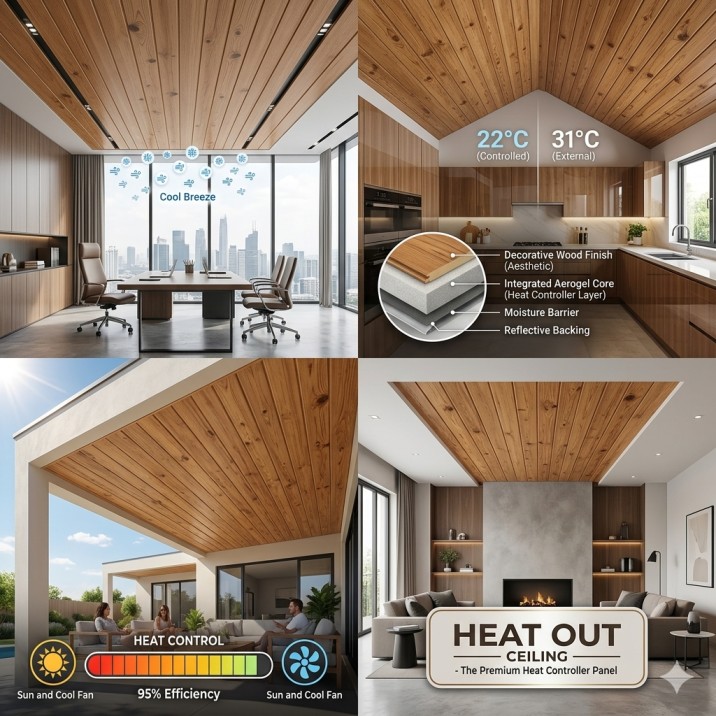
A Heat Out Ceiling is a ceiling panel system installed below the roof that acts as a heat barrier. It prevents the roof heat from directly entering the room and helps maintain a cooler indoor temperature.
Heat Out Ceiling is a false ceiling system designed to reduce heat entering a building from the roof, keeping the indoor space cooler. It is commonly used in hot climates like India to improve thermal comfort without relying fully on air conditioning.
How It Works
Thermal insulation layer stops heat from the roof.
Air gap between roof and ceiling reduces heat transfer.
Reflective or insulated materials bounce heat away.
Because hot roofs transfer heat downward, this ceiling acts like a shield between the roof and room.
Advantages of Roofing Shingles
🏠 1. Cost-Effective
Shingles are generally more affordable compared to many other roofing materials like metal or tile, making them ideal for budget-friendly projects.
🔧 2. Easy Installation
They are lightweight and simple to install, which reduces labor costs and installation time.
🎨 3. Attractive Appearance
Available in various colors, textures, and styles, shingles can match different architectural designs and improve overall property look.
🌧️ 4. Weather Resistant
High-quality shingles provide good resistance against rain, wind, and moderate heat, protecting the structure effectively.
🔥 5. Fire Resistance
Many modern shingles come with fire-resistant ratings, increasing building safety.
🛠️ 6. Easy Maintenance & Repair
If damaged, individual shingles can be replaced without changing the entire roof.
🌡️ 7. Energy Efficiency
Certain shingles are designed to reflect sunlight, helping reduce indoor heat and lower cooling costs.
⏳ 8. Good Lifespan
Depending on the type (asphalt, architectural, etc.), shingles can last 15–30 years or more with proper maintenance.